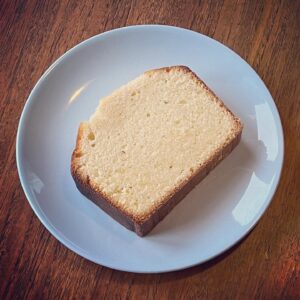
This vintage retro cake recipe for vanilla pound cake with fig leaf syrup draws inspiration from Good Housekeeping’s ‘Picture Cake Making’ cookbook published in 1952. Their ‘Madeira’ cake is included in the ‘Creaming method’ section, which features ‘the great majority of cakes’ that derive their name from ‘fat and sugar that are creamed together’.
Pound cake is dense, moist cake with a golden crust. My take on this classic cake includes the addition of a simple syrup infused with fig leaves. Think: toasted coconut mixed with vanilla, with a hint of earthiness and greenery.
Pound cake has stood the test of time, because it is so classic, so delicious. The first pound cake was created in the 1700s. It comprised equal ratios of butter, flour, sugar and eggs – 1 pound each. There are several offshoots of the pound cake, including ‘quatre-quarts’ cake in France, and the ‘butter’ or ‘Madeira’ cake in Britain and Australia.
This is only one of a range of vintage retro cake recipes on my website. Check out the full range of recipes here!
Ingredients
Fig leaf syrup
3-5 fresh fig leaves
500g (2 1/4 cups) sugar
480ml (2 cups) water
Pound cake
250g (1 cup plus 2 tbsp) caster sugar
115g (1/2 cup minus 2 tsp) unsalted butter, about 65°F (18°C)
30g (2 tbsp) refined coconut oil
1/2 tsp baking powder
2g (1/2 tsp) Diamond Crystal kosher salt; for table salt, use half as much by volume
15g (1 tbsp) vanilla bean paste
150g (3 large) eggs, brought to about 65°F (18°C)
80g (1/2 cup) cake flour
135g (1 cup minus 1 tbsp) plain flour, plus more for dusting
15g (1 tbsp) vanilla extract
140g (about 1/2 cup plus 1 tbsp) sour cream
Method
- For the fig leaf syrup, place fig leaves on 1-2 baking trays and dry in oven set to 130°C until crisp but not brown, about 15 minutes. Meanwhile, prepare a simple syrup by heating sugar and water until the sugar is dissolved completely and the water just starts to boil. Take off the heat and submerge the leaves. Cover and leave to cool. Once cool, place in fridge to steep for a minimum of three hours, as much as 12 hours – depending on the strength of the infusion. Strain to remove leaves and transfer to a sterilised jar. This recipe makes more than is required. Use 115mls (about 1/2 cup minus 2 tsp) to soak the cake. The remainder will keep refrigerated for up to 2 weeks.
- For the pound cake, adjust oven rack to lower-third and preheat to 190°C. Lightly grease a 23cm x 12cm aluminum loaf pan, line with baking paper, and then grease and dust again with flour. In the bowl of a stand mixer fitted with a paddle attachment, combine sugar, butter, coconut oil, baking powder, salt, and vanilla seeds. Mix on low to combine, then increase to medium and cream until fluffy and light, about 5 minutes. About halfway through, pause to scrape bowl and beater with a flexible spatula. While mixing, in a separate bowl, sieve together the two flours and whisk to thoroughly combine.
- With mixer still running, add eggs one at a time, letting each fully incorporate before adding the next. Reduce speed to low and sprinkle in 1/3 of flour, then add vanilla extract and 1/3 of sour cream. Repeat with remaining flour and sour cream, working in thirds as before.
- Scrape bowl and beater with a flexible spatula and resume mixing on medium speed just to ensure everything is well combined. The batter should look creamy and thick, registering around 18°C on a digital thermometer.
- Scrape into prepared pan and bake until crust is golden, about 55-65 minutes or to an internal temperature of 93°C. At the 30 minute mark, quickly cover the cake with foil to prevent excessive browning. Once baked, spoon cool syrup on hot cake. Cover again with foil and leave cake to cool in tin. Once cool, unmould and wrap tightly in plastic wrap. Store at room temperature for 12 hours.
This retro Good Housekeeping cake recipe book encourages its readers to use ‘Correct proportions of ingredients, accuracy in weighing, measuring and baking, and good equipment… for successful cake making.’